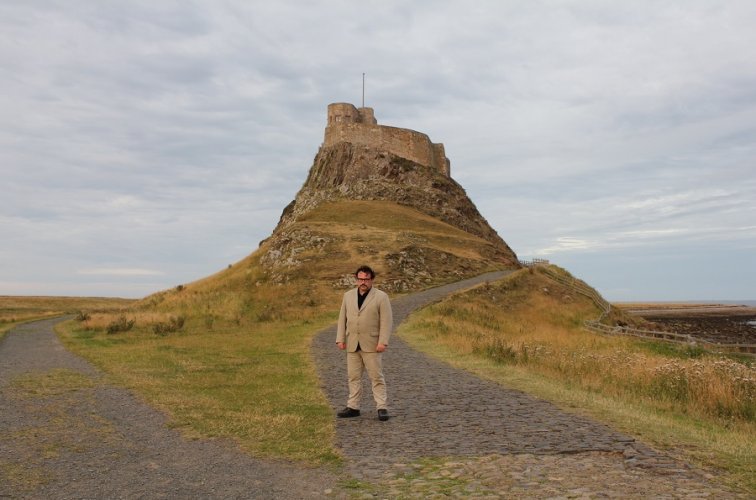
Emily Cropton
In 2024, multidisciplinary artist Emily Cropton undertook a research residency with The Maltings in partnership with Newcastle University’s Centre for Rural Economy, Institute for Creative Arts Practice and Population Health Sciences Institute. The residency explored wellbeing in rural Northumberland, examining relationships of care between landscapes and communities, and the interconnected social and environmental systems at Hauxley Nature Reserve, Wooler and across the Cheviots.
Over eight months, Emily immersed herself in rural life, participating in sheep auctions, digging for clay, constructing dead hedges and walking the Cheviot Hills. These encounters informed Nature Table, an exhibition bringing together the ideas, materials and stories gathered throughout the residency.
Based in the Scottish Borders, Emily is a multidisciplinary artist whose socially engaged practice spans visual art, landscape architecture, teaching and creative producing. Working primarily in rural contexts, she explores the relationships between people, place and the natural environment.
The residency was informed by research demonstrating that living in rural areas can have both positive and negative impacts on wellbeing, creating opportunities for artists and researchers to exchange knowledge and develop new perspectives on contemporary rural life.


Durty Beanz
In 2023, Glasgow-based Action Research Group Durty Beanz undertook a residency with the Maltings in partnership with Newcastle University’s Centre for Rural Economy and Institute for Creative Arts Practice. Working with researchers, they explored rural food production, consumption and the ways value is created by both producers and consumers.
The residency culminated in NEVER EVER, an ambitious film following a fictional television presenter travelling across Northumberland in search of the region’s food and farming stories. Blending humour with research, the work examines the complex relationships between food, rurality and digital culture through a distinctly playful lens.
Durty Beanz is a Glasgow-based Action Research Group bringing together artists, academics and makers whose interdisciplinary practice sits at the intersection of contemporary art and digital anthropology. Their work explores food systems, climate, cultural identity and digital culture through collaborative research and creative experimentation.
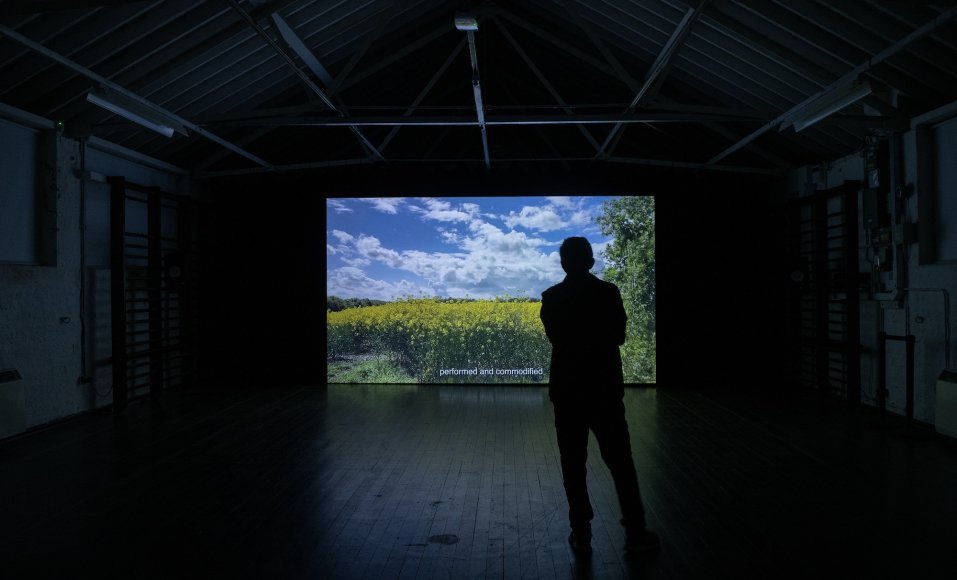
MBT Durty Beanz Never Ever

Morag Eaton & Mats Wikström
In 2021, artists Morag Eaton (Berwick-upon-Tweed) and Mats Wikström (Råneå, northern Sweden) took part in a digital residency exploring creative practice across rural communities. Developed in response to the restrictions of the COVID-19 pandemic, the residency created space for the artists to exchange ideas, share their practices and build international connections despite being physically apart.
Through online collaboration, Morag and Mats explored the similarities and differences between their local creative communities, considering new ways of working that could strengthen cultural production in rural places. The residency demonstrated how digital exchange can foster meaningful artistic collaboration across borders while deepening connections between people and place.


Joanne Coates
From 2020–21, documentary photographer Joanne Coates undertook a residency with The Maltings in partnership with Newcastle University’s Centre for Rural Economy and Institute for Creative Arts Practice. Collaborating with Professor Sally Shortall, Joanne explored gender inequality in agriculture by documenting the lives of women farmers across Northumberland and the Scottish Borders.
The residency culminated in Daughters of the Soil, a powerful body of photographic work highlighting the vital yet often overlooked contribution of women to the farming industry. Through portraits and personal stories, the project examines the barriers women continue to face, including access to land, leadership opportunities and the challenges of balancing farming with family life.
Joanne Coates is a photographer, storyteller and socially engaged artist whose work explores class, gender and rural communities. Her photography has been widely exhibited and featured in national publications, bringing greater visibility to underrepresented voices and lived experiences.

Image courtesy Joanne Coates

GÂST
From 2017–18, artist duo GÂST undertook a residency with The Maltings in partnership with Newcastle University>’s Centre for Rural Economy. Over six months living and working in Berwick-upon-Tweed, they explored the material and cultural identity of places central to the town’s history and community life, including the Brown Bear pub, the promenade amusement arcade and Shielfield Park.
The residency culminated in in the best of spirits…, an immersive exhibition of sound and installation that examined collective memory, local heritage and the stories embedded within everyday places, asking how communities preserve and shape their shared histories.
GÂST is the collaborative practice of artists Laura Mahony and Dale Fearnley. Working across archival and time-based media, sculpture and performance, their work uncovers the connections between people, place and memory through research-led, site-responsive projects.


Gemma Burditt
From 2016–17, filmmaker and animator Gemma Burditt undertook a residency with The Maltings in partnership with Newcastle University’s Centre for Rural Economy, Institute for Creative Arts Practice and Institute for Sustainability. Working with dairy farmers, researchers and land-based businesses across Northumberland, she explored how agriculture is evolving in response to social, economic and environmental change.
The residency resulted in The Art of Milk and later informed Future Landscapes, using animation to trace the history of dairy farming while examining the changing relationship between farming communities, technology and the rural landscape. Together, the works consider how climate change, agricultural policy and innovation are reshaping the future of Britain’s countryside.
Gemma Burditt is an illustrator, filmmaker and animator whose work explores the human stories behind social, political and environmental change. Through documentary and animation, she creates thoughtful, research-led works that connect personal experiences with wider societal issues.