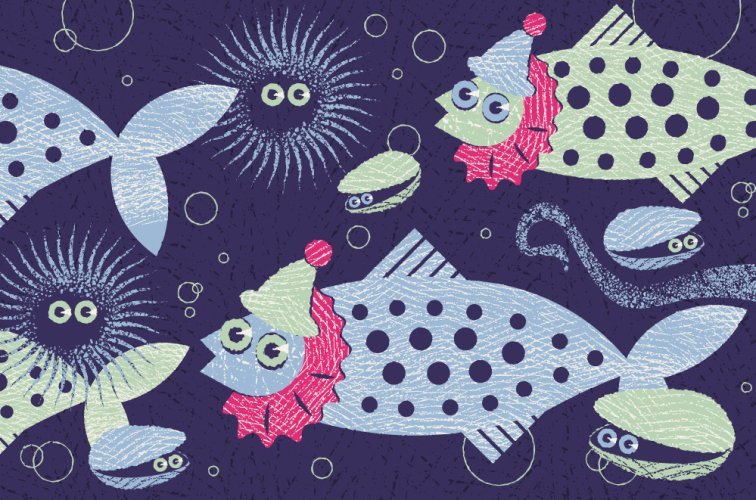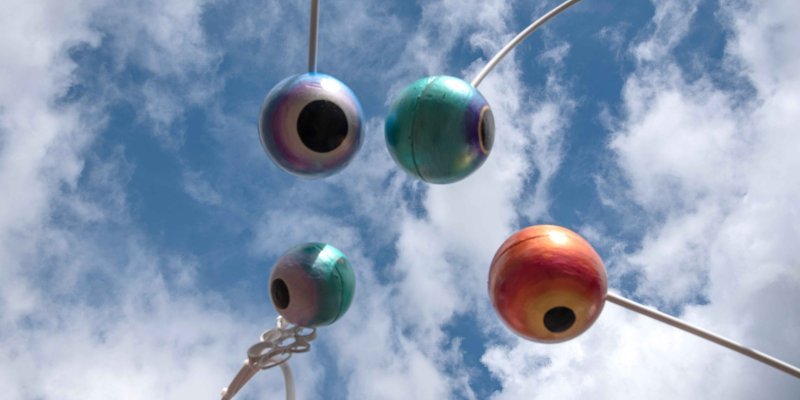
Discover some of the creatures and histories that inspired The Visitors.
Pearls
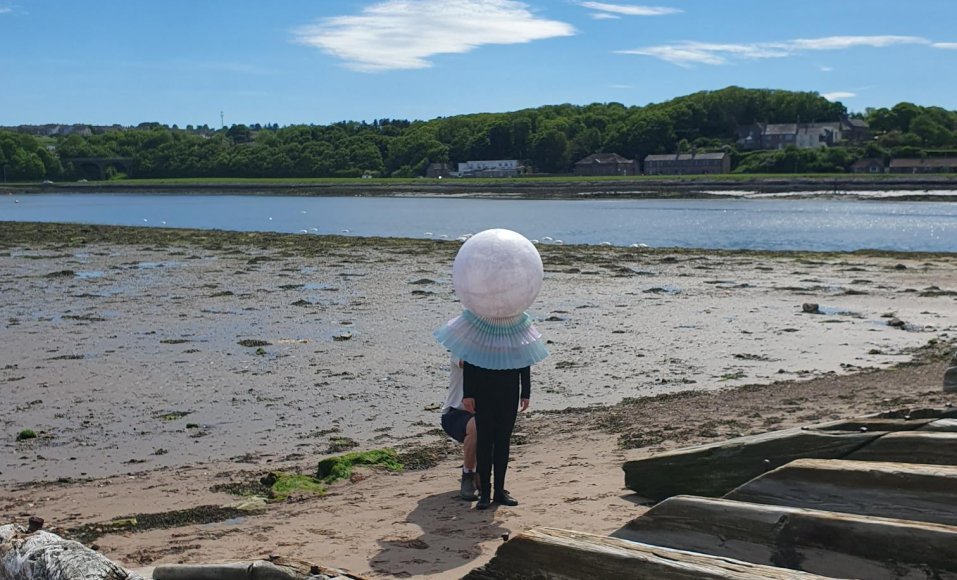
Peeping out from the shifting sands of the Tweed, Freshwater Pearls settle down for their century-long lives under the nose of the human realm. Freshwater Pearl Mussels filter up to 50 litres of water a day, taking care of their shared aquatic home by filtering out harmful bacteria as the river courses through their bodies.
What have they seen in their long lives? What has flowed through them over the years? Lewis Hetherington asks these questions in the form of giant pearls, filled with images from Berwick’s history, filled with the memories of the town.
Salmon
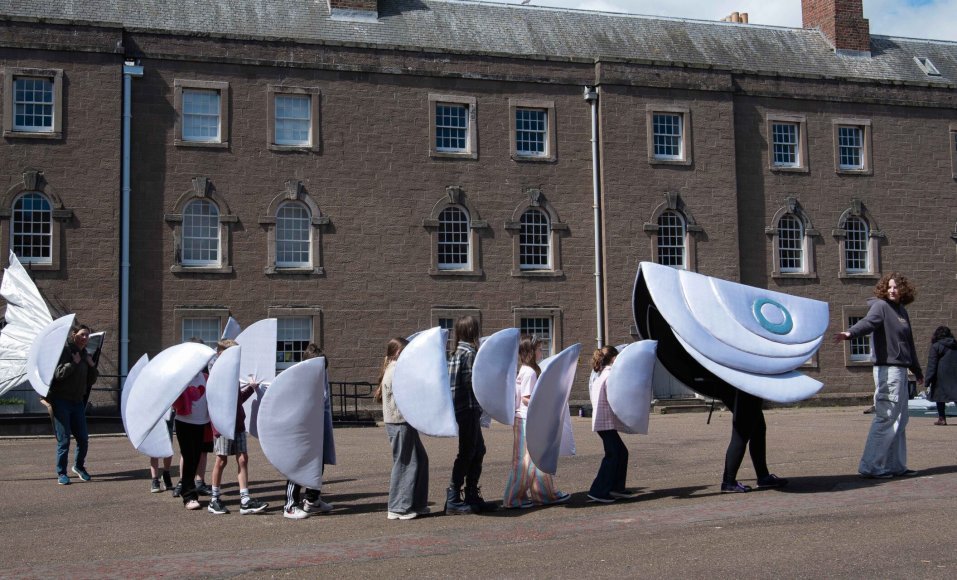
From Scotland to England, river to sea, fresh water to salt water, Salmon are the border-crossers of the estuary. Unafraid of trespassing into unknown worlds, Salmon swim hundreds of miles from streams to the ocean, then travel for thousands of miles to feed. After three years in the salty world, it’s time to swim home to fresh water, and back up the Tweed to the very streams they were born in, to lay their own eggs.
One of The Visitors was a glistening giant salmon, accompanied by members of the public alongside Maltings Youth Theatre, weaving through the streets of Berwick.
Berwick has celebrated the salmon through the centuries – today through the Salmon Queen festival. The Visitors rethinks this historic annual pageant, but this time it is the creatures of the river and sea themselves who took centre stage.
Barnacles
Throughout history, barnacles have been linked to stories of magic and surreal transformations.
In the Middle Ages, it was believed that geese emerged out of barnacles! It was also a widespread belief that barnacles grew on trees.
In the 19th century, a Berwicker called John Vaughan Thompson discovered the equally magical truth about barnacles: they undergo metamorphosis, transforming from small, almost invisible, jelly-like babies, into hard-shelled adults.
Is this transformation a kind of magic? And what would happen if the barnacles metamorphosed again?
Drawing on the magic of the barnacle and of the ocean, and on Berwick’s unique history, Susan Barnacles was born.
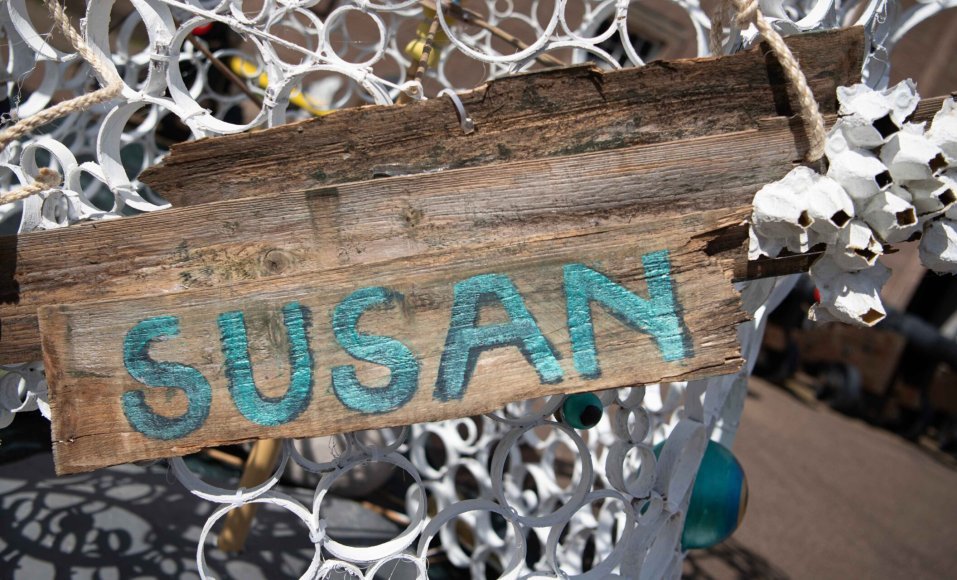
Susan
What can the sea remember?
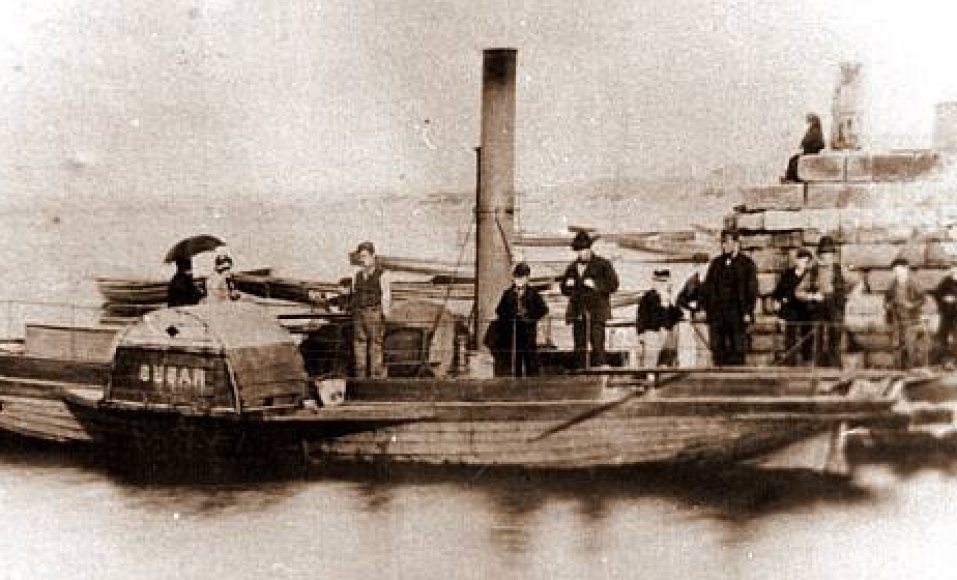
The feeling of a boat cutting across its glinting surface, sounds of whirring, splashing, gulls crying, children laughing. Faded figures silhouetted on the quayside.
There was once a boat called Susan. She would take people across the water between Spittal and Berwick. She was a paddle boat steamer and was loved by locals and holiday makers alike, a hundred years ago…
The Pierrots
‘I heard them, before I ever saw them…I can remember, hearing jingles, and kazoo like sounds…This otherworldly, yet at the same time down to earth, cacophony of bells and clatters, washboard and voices. This jaunty soundscape heralded their arrival.’ – Archive of Pierrotters
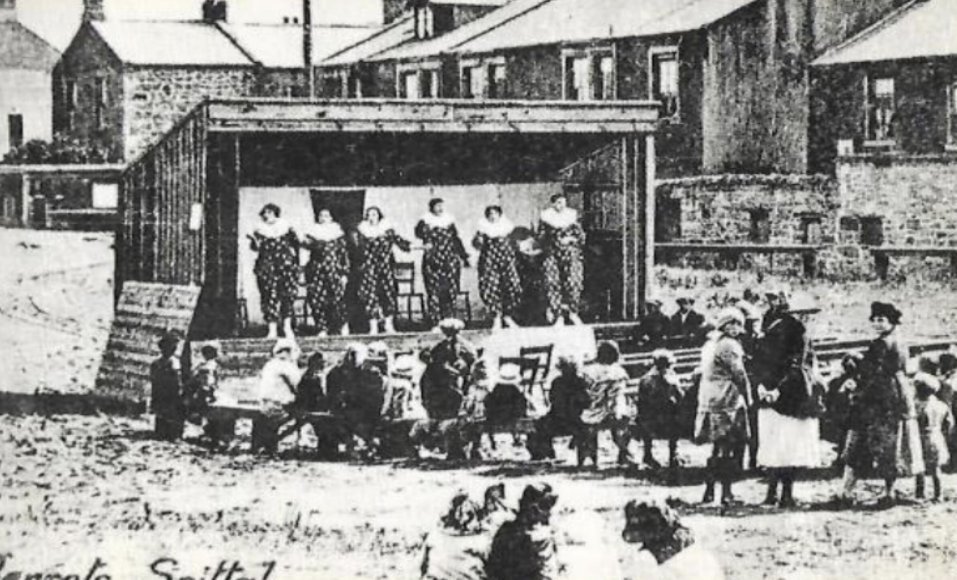
Since the industrial revolution, Pierrots have appeared on UK shorelines, ready to bring anarchic joy, and a vision for a completely different way of being human, to coastal locals and to those escaping the city. Noisy, playful, chaotic and otherworldly, the Pierrots would regularly perform on Spittal Beach. The memory of these joyful performances, and an image from the Berwick Record Office, inspired The Visitors. Children and adults dressed as Pierrots accompanied the mysterious sea creatures as they explored the town in rowdy procession!
Protecting the Tweed
At the heart of The Visitors is the call to consider the creatures we share the planet with. As our earth heats up, the underwater world is getting hotter too. Down in the waters of the Tweed, all of the creatures that inspired The Visitors are struggling to survive.
The Woodlands & Wildlife for Water Project is an effort to tackle these dangers to the River Tweed. This project, led by Tweed Forum, involves planting 300,000 trees along the Tweed, to help lower water temperatures, whilst also benefiting communities along the river.
You can find out more about the Woodlands for Wildlife & Water project here: Woodlands for Wildlife & Water – Destination Tweed : Destination Tweed
Photo credits: Jennifer Charlton Photography
Archive images courtesy of Berwick Record Office